Our Motto: Unity and Discipline, "एकता और अनुशासन"/
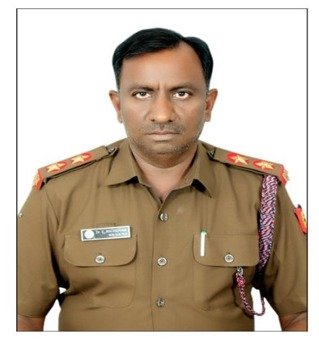
MESSAGE FROM ANO
Today, I will introduce you to the NCC. It is the largest uniformed youth organization. NCC is a voluntary organization. It is for school and college students.
Main Objectives of NCC :-
- Develop character and discipline
- Develop character corner
- Build leadership qualities
- Prepare youth for future challenges
Benefits of Joining NCC: By joining NCC, you transform yourself into a future leader.
The program helps you:
- Gain Leadership Skills: Develop essential qualities to lead effectively.
- Build Confidence: Enhance self-assurance and belief in your capabilities.
- Career Opportunities: Open up unique and diverse career paths.
- National Level Exposure: Receive opportunities for broader recognition and experience.
NCC Activities
NCC provides many exciting activities that allow you to explore and serve, including:
- Drill and weapon training
- Adventure camps
- Community development programs
Conclusion:
NCC is not just an activity; it is a journey that transforms you into a disciplined, confident, and responsible leader.
Adopted in 1980, it was chosen to replace the earlier motto ("Duty, Honour, Country") to better reflect the NCC's core purpose in a diverse nation like India. Here’s what it truly signifies:
Unity (Ekta): It goes beyond just religious or regional harmony. It means group cohesion learning to work as a single, seamless team where every cadet puts the mission and the unit above their personal background, caste, or creed. It directly drives the goal of national integration.
Discipline (Anushasan): This isn't just about obeying orders; it's self-discipline—the inner ability to control your mind, manage your time, and perform your duties diligently even when no one is watching. It builds the character and reliability needed for leadership.
This ethos is reflected in the NCC's motto, "Unity and Discipline" (Ekta aur Anushasan), and its four cardinal principles of discipline: Obey with a smile, Be Punctual, Work hard and without fuss, and make no excuses and tell no lies.
In practice, every cadet lives this motto through the four cardinal principles of
discipline:
- Obey with a smile.
- Be punctual.
- Work hard and without fuss.
- Make no excuses and tell no lies.
The National Cadet Corps (NCC) aims to develop well-rounded, disciplined, and patriotic citizens by instilling character, leadership, and a spirit of selfless service in the youth. The officially approved aims (as of March 2001) are twofold: Individual Development: To develop qualities of character, courage, comradeship, discipline, leadership, a secular outlook, a spirit of adventure, sportsmanship, and the ideals of selfless service. This transforms cadets into responsible, useful citizens.
National Service: To create a pool of organized, trained, and motivated youth to provide leadership in all walks of life, including the Armed Forces, and to always be available for the service of the nation.
To achieve these aims, the NCC focuses on key objectives such as:
Fostering National Integration: Promoting a secular outlook and unity among youth from diverse backgrounds.
Encouraging Social Service: Involving cadets in community development activities like tree plantation, blood donation, and disaster relief.
Providing Military Training: Imparting basic military training in areas like drill, weapon handling, map reading, and first aid.
Promoting Adventure: Organizing activities like trekking, mountaineering, and sailing to build resilience and leadership.
So, while the aims shape what the NCC wants to build, the motto Unity and Discipline is the core operating philosophy that guides cadets on how to achieve it every single day.So, while the aims shape what the NCC wants to build, the motto Unity and Discipline is the core operating philosophy that guides cadets on how to achieve it every single day.The National Cadet Corps (NCC) is the largest uniformed youth organization in the world and the youth wing of the Indian Armed Forces.
Here is a comprehensive overview of the NCC, its structure, and its activities:
History & Genesis
The NCC's roots go back to the University Corps created under the Indian Defence Act of 1917. It was later replaced by the University Training Corps (UTC) and then the University Officers Training Corps (UOTC) in 1942. The modern NCC was formally established on 15 July 1948 under the National Cadet Corps Act of 1948. The Girls Division was raised in July 1949, followed by the Air Wing (1950) and Naval Wing (1952), making it a Tri-Services organization.
Organization Structure
The NCC has a structured hierarchical chain of command:
National Level:Headed by the Director General (DG), an Army Officer of the rank of Lieutenant General.
State Level: 19 Directorates across States/UTs, headed by a Brigadier or equivalent.
Group Level: 91 Group Headquarters under directorates, each headed by a Colonel.
Unit Level: Over 650 Units (Battalions, Naval Wings, Air Squadrons) commanded by Lt. Colonels/Majors.
Cadets will be enrolled in the Senior Division (colleges) and Junior Division (schools), and are grouped into Army, Navy, and Air Force wings.
Activities & Training
- Military Training: Drill, weapon handling, map reading, and first aid.
- Adventure Activities: Trekking, mountaineering, parasailing, and rock climbing.
- Social Service: Blood donation, tree plantation, disaster relief, and traffic control.
- Modern Training: Cyber security, drone operations, and disaster management.
- Camps: Annual Training Camps (ATC), National Integration Camps (NIC), Republic Day Camp, and Thal Sainik Camp.
- NCC training is a blend of military, adventure, and social service:
Motto, Pledge & Oath
- Motto: "Unity and Discipline" (एकता और अनुशासन), adopted in 1980.
- Pledge: Cadet’s pledge to uphold the unity of India and be disciplined, responsible citizens.
- Oath: A solemn promise to serve the motherland loyally and abide by NCC rules.
- Armed Forces: Reserved vacancies and age relaxation in the Army, Navy, and Air Force.
- Paramilitary Forces: Special benefits for CRPF, CISF, BSF, etc.
- Corporate Sector: Companies like Reliance and Vedanta offer preferred placements to 'C' Certificate holders.
Benefits for Cadets:
NCC 'C' Certificate holders receive significant benefits:The NCC plays a crucial role in nation-building by shaping disciplined, responsible, and patriotic citizens. It's a voluntary organization with no liability for active military service after course completion.
SELECTION PROCESS
National Cadet Corps(NCC) enrolment is done through a structured selection process to ensure discipline and suitability of cadets.
- PHYSICAL TEST: Includes 2.5 km running, height measurement, chest measurement, push-ups, sit-ups, and other fitness tests.
- WRITTEN EXAM: Covers general knowledge, current affairs, and basic information about the Armed Forces.
- FINAL ENROLMENT: Successful candidates are allotted an online enrolment number after verification and selection.
DOCUMENTS REQUIRED
- Duly filled application form
- Aadhaar Card photocopy (clear copy)
- State Bank of India passbook Xerox (student account – new)
- SSC marks memo Xerox (clear copy)
If you would like to know more about National Cadet Corps, feel free to explore any specific aspect such as its training programs, eligibility criteria, camps, or career opportunities please contact:
Lieutenant Dr. G. Machender MSc, Ph.D, LLB.
Associate NCC Officer (ANO)
Assistant professor © Geology Dept, MGU.
Mobile. 9849943351.
Lieutenant Dr. G. Machender MSC, PHD, LLB
Associate NCC Officer (ANO),
National Cadet Corps,
MahatmaGandhiUniversity,
Nalgonda